No products in the cart.
Shop all products
Meet the Producers
Hand-picked estates that define craftsmanship, terroir, and timeless style
Vietti
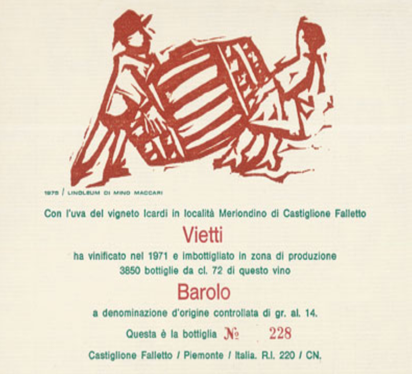
Few names in Piedmont carry the quiet authority of Vietti, a family estate that helped shape modern Barolo while never straying from its roots. When Alfredo Currado, freshly graduated from Alba’s School of Enology, married Luciana Vietti in 1957, he inherited not just her family’s modest cellars in Castiglione Falletto, but a legacy that would come to define the Langhe.
While Alfredo championed the traditional Barolo style—long ageing in large Slavonian oak casks—he also embraced innovation. When the winery expanded beneath the medieval castle of Castiglione Falletto, his son Luca and son-in-law Mario Cordero introduced French oak barriques to craft a new generation of expressive Barbera, including the renowned La Crena and Tre Vigne bottlings.
Today, Vietti farms 22 hectares of estate vineyards, producing roughly 200,000 bottles annually, each reflecting a deep respect for site and history. Their range spans Barolo and Barbaresco to Dolcetto d’Alba, Roero Arneis, and the ever-charming Moscato d’Asti—each wrapped in the now-iconic, artist-designed labels of Gianni Gallo.
In every glass, Vietti embodies what Piedmont does best: heritage, precision, and the seamless harmony of art and terroir.
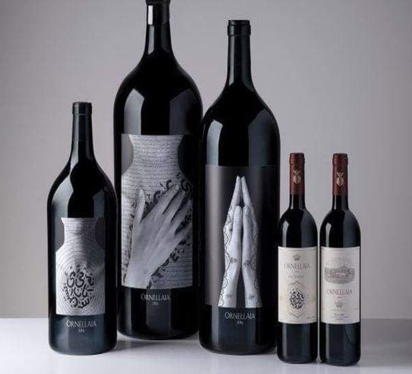
Few estates capture the spirit of modern Tuscany quite like Ornellaia. Founded in the early 1980s by Lodovico Antinori, who broke from his family’s centuries-old Marchesi Antinori dynasty to pursue his own vision, Ornellaia was born from a restless curiosity and a belief that great wine could transcend borders.
Settling along the Bolgheri coast, just beside the famed Tenuta San Guido of Sassicaia, Lodovico transformed the upper reaches of his family’s Belvedere estate into an avant-garde winery. With guidance from André Tchelistcheff, the legendary Napa Valley winemaker, he built cellars that married Tuscan terroir with California innovation. His goal was not imitation, but reinvention—to craft wines of grandeur and grace, unbound by the sharp austerity of traditional Tuscan reds.
At Tchelistcheff’s urging, Lodovico planted Merlot alongside Cabernet Sauvignon, blending the two for his flagship wine, Ornellaia. Yet one vineyard stood apart: Masseto, whose Merlot vines yielded a wine of such depth and sensuality that it soon earned a legend of its own. Released as a pure varietal beginning with the 1987 vintage, Masseto became Tuscany’s answer to Pomerol—lush, structured, and unmistakably rooted in Bolgheri’s maritime soils.
With time, Michel Rolland joined as consultant, refining the estate’s touch with Bordeaux sensibility. Today, Ornellaia’s 60 hectares produce around 500,000 bottles annually, including the white Poggio alle Gazze and the approachable red Le Volte.
Now under shared stewardship with the Robert Mondavi Winery, Ornellaia continues to define what “Super Tuscan” truly means—a balance of heritage, modernity, and global ambition, guided by the same bold spirit that first led Lodovico Antinori down the coast to Bolgheri.
Tenuta dell’Ornellaia
Tenuta di Argiano
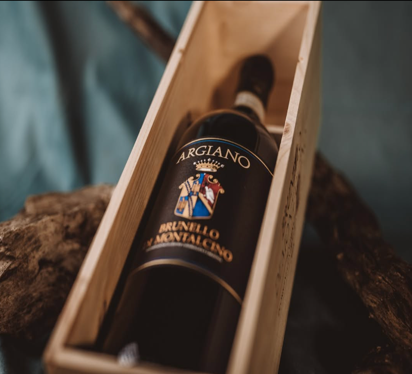
At the crossroads of tradition and innovation, Argiano represents the evolving spirit of modern Montalcino. From its historic estate—anchored by a fifteenth-century villa that has stood since the days of the Gaetani Lovatelli family—Argiano continues to honor centuries of winemaking heritage while embracing the freedom of contemporary expression.
Under the stewardship of Noemi Marone Cinzano, who acquired the property in 1980, Argiano became one of the first Montalcino estates to master both DOCG-classified Brunello di Montalcino and Super-Tuscan wines. In the mid-1990s, estate manager Sebastiano Rosa and legendary enologist Giacomo Tachis redefined the house style—crafting Brunello of precision and purity, and creating Solengo, a groundbreaking blend of Sangiovese, Cabernet Sauvignon, Merlot, and Syrah that quickly gained international acclaim.
While Brunello remains Argiano’s cornerstone, Solengo demonstrated that Montalcino’s soils could also yield world-class wines outside the DOCG rules. The estate’s 50 hectares of vines now produce about 230,000 bottles annually, spanning Brunello di Montalcino, Rosso di Montalcino, and the modern icon Solengo—each expressing a balance of Tuscan character and cosmopolitan vision.
Today, beneath the enduring watch of the Argianaccio tower, Argiano continues to craft wines that bridge old and new Tuscany—proof that history and progress need not compete, but can instead elevate one another.
If modern Italian wine has a single origin story, it begins with Sassicaia. Once called “Italy’s greatest red wine” by Hugh Johnson, Sassicaia redefined what Tuscan wine could be—elegant, age-worthy, and international in scope.
The story begins in the 1940s, when Marchese Mario Incisa della Rocchetta, a Piedmontese aristocrat and horse breeder, planted Cabernet Sauvignon and Cabernet Franc cuttings from Bordeaux’s Château Lafite on his coastal San Guido estate near Bolgheri. The region, then better known for livestock than vines, seemed an unlikely home for fine wine. Yet over time, the results were unmistakable: a wine of noble structure and remarkable finesse, initially shared only with family and friends.
By 1968, Mario’s nephew Piero Antinori persuaded him to release a small commercial vintage, and with the help of winemaker Giacomo Tachis and Bordeaux consultant Émile Peynaud, Sassicaia took on its signature form—refined, mineral, and unmistakably Tuscan. A decade later, the 1978 vintage triumphed over top Bordeaux in a Decanter magazine tasting in London, cementing its legend.
In 1994, Sassicaia achieved what no Italian wine had before: its own appellation, Bolgheri Sassicaia DOC, reserved exclusively for the vineyards of Tenuta San Guido. Today, under the guidance of Marchese Niccolò Incisa della Rocchetta, the estate produces roughly 150,000 bottles annually, maintaining its singular focus on Sassicaia.
Alongside this icon, the family introduced Guidalberto di Tenuta San Guido in 2000—a blend of Cabernet Sauvignon and Merlot crafted as a graceful, earlier-drinking counterpart to Sassicaia. Named after an ancestor celebrated for his agricultural vision, Guidalberto embodies the same elegance and coastal restraint, offering a glimpse of Bolgheri’s magic with youthful approachability.
From its quiet beginnings to global renown, Tenuta San Guido remains a cornerstone of Italian wine—a place where tradition, precision, and vision converge in every bottle.
Tenuta San Guido
Far Niente
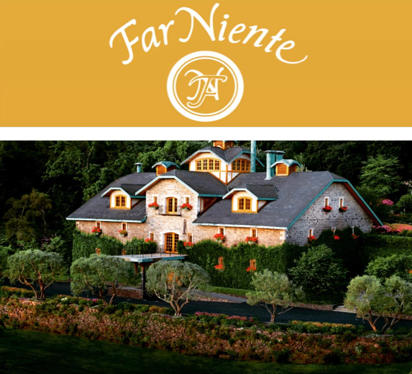
Few Napa Valley wineries embody timeless elegance quite like Far Niente. Founded in 1885 by San Francisco pioneer John Benson, a forty-niner and uncle to the artist Winslow Homer, Far Niente quickly became one of the valley’s architectural and viticultural landmarks. Its name—Italian for “without a care”—was carved into the stone façade of the original winery, a nod to the estate’s balance of beauty and precision.
After decades of dormancy following Prohibition, Far Niente was meticulously restored in 1979 by Gil Nickel, who revived the historic property with a singular vision: to produce wines of pure elegance that capture Napa Valley’s most refined expression.
Located in Oakville, at the heart of Napa’s most celebrated terroir, the estate focuses exclusively on Chardonnay and Cabernet Sauvignon, crafted with a signature style defined by restraint, structure, and polish. Far Niente’s Chardonnays, sourced from the cooler reaches of Coombsville and Carneros, are known for their balance of richness and minerality, while its Cabernets—anchored in the deep, gravelly loam of Oakville—offer layered complexity and graceful longevity.
Today, under the leadership of the Nickel family, Far Niente continues to honor its historic roots while embracing innovation—from its pioneering underground caves to sustainable vineyard practices that preserve the land for future generations.
More than a winery, Far Niente represents a philosophy: that great wine, like great art, is born from patience, precision, and a touch of timeless beauty.
Among California’s new classics, few estates have achieved the quiet consistency and depth of DuMOL. Founded in 1996 by winemaker Andy Smith, viticulturist Kerry Murphy, and partner Michael Verlander, DuMOL has become a benchmark for modern Sonoma craftsmanship—meticulous, expressive, and rooted in place.
Based in the heart of the Russian River Valley, DuMOL focuses on Chardonnay, Pinot Noir, and Syrah, with a guiding philosophy that great wine is grown, not made. Each bottling—whether a vineyard designate like Wester Reach, Finn, or Isobel, or a regional blend—reflects a patient and precise approach to farming, emphasizing low yields, gentle extraction, and native fermentations that preserve the vineyard’s natural character.
Andy Smith, who also oversees all estate viticulture, has quietly refined DuMOL’s style into one of layered sophistication: rich yet balanced, powerful yet restrained. The wines’ hallmark lies in their texture—silken and seamless—with a tension between ripeness and freshness that has become the signature of the estate.
Today, DuMOL farms more than 150 acres of estate and grower vineyards across the Russian River Valley, Green Valley, and Sonoma Coast, all managed with sustainable and regenerative practices. Their minimalist winery, tucked discreetly into Windsor, is purpose-built for precision rather than show—an approach that mirrors the wines themselves.
In every bottle, DuMOL captures the quiet confidence of Sonoma’s most thoughtful producers: wines that speak softly, age gracefully, and reward those who listen closely.
Dumol
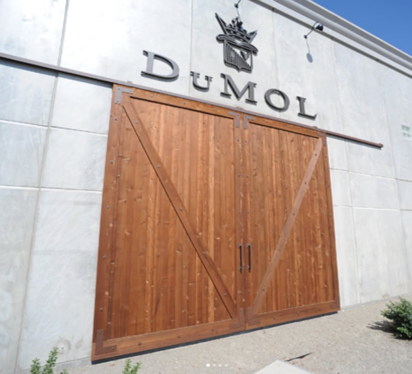
Teutonic Wine Company
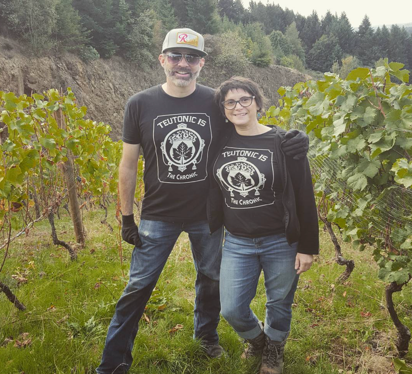
At once eccentric and deeply traditional, Teutonic Wine Company stands as one of Oregon’s most distinctive voices. Founded by Barnaby and Olga Tuttle in 2005, the winery began as a singular experiment: to craft wines in the spirit of Germany’s Mosel and Pfalz, but from the cool, wind-swept slopes of the Pacific Northwest.
The Tuttles’ inspiration came from a chance bottle of Mosel Riesling that changed everything. They set out to recreate that ethereal balance of low alcohol, high acidity, and textural nuance—a vision far removed from the richer, oakier wines dominating Oregon at the time. From their modest urban winery in Portland, they source fruit from meticulously chosen high-elevation, dry-farmed vineyards across the Willamette and Columbia Gorge.
Teutonic’s style is unmistakable: lean, nervy, and precise, with a purity that channels their Germanic models without mimicry. Their range spans Riesling, Gewürztraminer, Grüner Veltliner, Pinot Noir, and rare varieties like Silvaner and Scheurebe, each handled with native fermentations, neutral oak, and minimal intervention.
Barnaby’s background as a restaurant wine buyer and Olga’s intuitive hospitality sensibility infuse the wines with both intellect and approachability—a combination that’s earned Teutonic a cult following among sommeliers and collectors alike.
Today, Teutonic Wine Company remains refreshingly independent, crafting wines that celebrate Oregon’s northern latitude through a distinctly old-world lens: vivid, expressive, and unapologetically original.
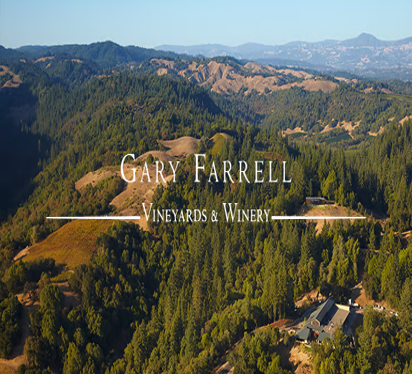
Long before the Russian River Valley became synonymous with world-class Pinot Noir and Chardonnay, Gary Farrell was quietly defining its voice. A self-taught winemaker who began his career in the 1970s under icons like Davis Bynum and Joe Rochioli, Farrell produced his first namesake wines in 1982, setting a benchmark for site-driven, cool-climate elegance.
Perched high in the hills above Healdsburg, the Gary Farrell Winery is both a tribute to the region’s pioneers and a model of modern precision. The estate partners with some of Sonoma’s most acclaimed vineyard sites—Rochioli, Allen, Olivet Lane, Hallberg, and Durell among them—crafting wines that express each site’s individuality through meticulous small-lot fermentations and restrained oak aging.
Since 2014, winemaker Theresa Heredia has carried the torch with a deft touch, refining the house style toward greater finesse and aromatic purity. Under her guidance, the wines balance California’s natural richness with a distinctly Burgundian sense of lift and tension.
Today, Gary Farrell Winery stands as one of the purest voices of the Russian River Valley—producing Chardonnay and Pinot Noir of poise, energy, and quiet depth. Every bottle honors both the man who believed in the region before anyone else, and the land that continues to reward that faith with timeless beauty.
Gary Farrell
Maison M. Chapoutier
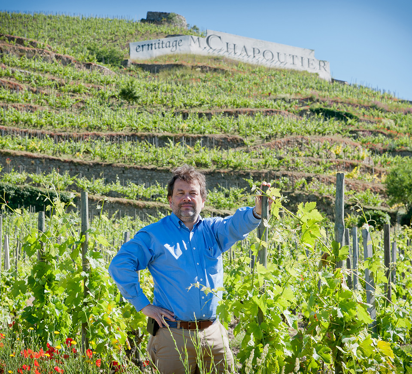
Few names in France command such enduring respect as M. Chapoutier, the storied house that has shaped the modern Rhône for more than two centuries. Founded in 1808 in Tain-l’Hermitage, the domaine rose to global prominence under the vision and intellect of Michel Chapoutier, who assumed control in 1990 and redefined the estate’s philosophy from the ground up.
Michel’s conviction was simple but radical: great wine begins with living soil. He converted all vineyards to biodynamic farming, championing terroir expression at a time when few dared to challenge convention. The result was a revolution in transparency—each cuvée labeled with the vineyard name, vintage, and even Braille script, symbolizing respect for accessibility and individuality.
From the granite slopes of Hermitage and Côte-Rôtie to the sunlit terraces of Châteauneuf-du-Pape and the schist soils of Roussillon, Chapoutier produces an astonishing range of wines, each reflecting its origin with clarity and precision. Flagship bottlings like L’Ermite, Le Pavillon, and De l’Orée stand among the Rhône’s most coveted expressions, while the négociant arm partners with growers across France and beyond to craft wines of authenticity and value.
Today, M. Chapoutier remains both deeply traditional and relentlessly forward-thinking—uniting heritage, science, and soul in a portfolio that speaks fluently of place. For Michel Chapoutier, the mission has never changed: to let nature, and the vineyard, have the final word.
For much of the 20th century, the granite slopes of Cornas were nearly forgotten—until Alain Voge helped return them to greatness. Born into a family that had farmed these steep terraces for generations, Voge took control of the domaine in the 1960s and began restoring abandoned parcels, convinced that Syrah from Cornas could rival the finest wines of the Northern Rhône.
His commitment to traditional craftsmanship and meticulous farming gradually placed Cornas back on the world map. Working with consulting enologist Albert Boeckel, Alain pursued small-parcel fermentations, minimal intervention, and long élevage in large oak, allowing the rugged minerality and natural intensity of the appellation to shine.
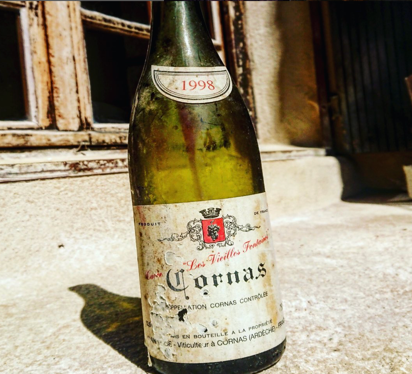
When Albéric Mazoyer joined as winemaker in the early 2000s, the estate deepened its focus on organic and biodynamic viticulture, completing certification in 2016. The wines—particularly Les Chailles, Vieilles Fontaines, and Les Vieilles Vignes—showcase the modern Cornas ideal: power balanced by precision, ripeness tempered by tension, and fruit framed by the granite and garrigue of their birthplace.
Today, under the direction of Lionel Fraisse, Domaine Alain Voge continues to define the soul of Cornas and Saint-Péray, producing Syrah and Marsanne wines that bridge generations: structured, soulful, and unmistakably of their place.
Domaine Alain Voge
Domaine Faiveley
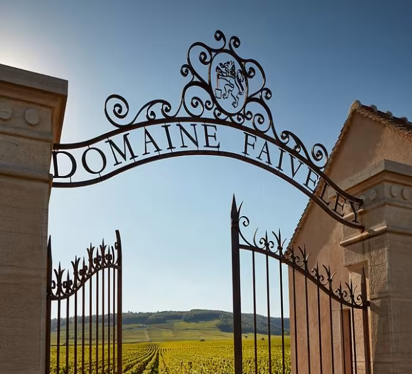
Spanning nearly two centuries of Burgundian history, Domaine Faiveley stands as one of the region’s great family dynasties. Founded in 1825 in Nuits-Saint-Georges, the domaine remains family-owned and operated—now guided by Erwan Faiveley, the seventh generation to steward its remarkable legacy.
With holdings stretching from Gevrey-Chambertin in the north to Mercurey in the Côte Chalonnaise, Faiveley farms over 120 hectares of vineyards, including prized parcels in Clos de Bèze, Corton-Charlemagne, Echezeaux, and Clos des Cortons Faiveley—the latter a monopole Grand Cru that serves as the family’s crown jewel.
Traditionally known for structure and longevity, the house style has evolved under Erwan and winemaker Jerome Flous toward greater precision, finesse, and aromatic purity. New cellar technology and a lighter hand with extraction and oak have brought a modern polish to Faiveley’s inherently classic soul.
Today, Domaine Faiveley unites scale with intimacy, producing wines that faithfully reflect their terroir—from the mineral tension of northern Côte de Nuits reds to the supple charm of Meursault and Puligny whites. Each bottle speaks to Burgundy’s enduring magic, seen through the lens of one of its most steadfast families.
Few domaines capture the precision, purity, and quiet intensity of modern Burgundy like Domaine Denis Mortet. Founded in 1993 by the late Denis Mortet, the estate quickly rose to cult status for its meticulous viticulture and near-obsessive attention to detail in both vineyard and cellar.
Denis, the son of Charles Mortet, inherited his father’s small holdings in Gevrey-Chambertin and built them into a domaine renowned for its silky textures and deep yet transparent fruit. His philosophy was simple but unrelenting: great wine is born in the vineyard. Every vine was hand-tended, yields were kept exceptionally low, and each parcel was vinified separately to preserve its character.
After Denis’s untimely passing in 2006, his son Arnaud Mortet assumed full control, refining the style toward even greater balance and finesse. Under his leadership, the wines—particularly from Clos de Vougeot, Lavaux St-Jacques, and Les Champeaux—have evolved from powerful to poised, combining generosity with minerality and remarkable length.
Today, Domaine Denis Mortet farms roughly 11 hectares of vines across Gevrey-Chambertin, Chambolle-Musigny, and Marsannay, producing wines that express the purity of Pinot Noir with rare precision. Each bottle reflects both a family’s legacy and Burgundy’s timeless pursuit of perfection—where power and elegance coexist in absolute harmony.
Domaine Denis Mortet
Domaine Georges Noëllat
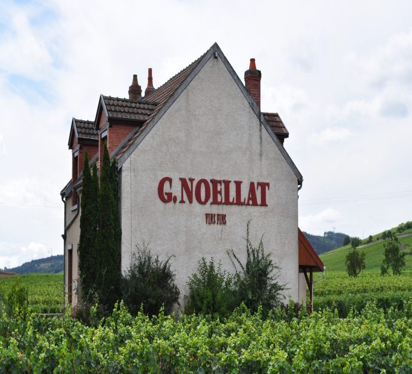
At the intersection of tradition and modern precision, Domaine Georges Noëllat stands as one of Burgundy’s most compelling modern success stories. Once a quiet family domaine supplying grapes to Méo-Camuzet and Leroy, it was revived in 2010 by Maxime Cheurlin, the great-grandson of Georges Noëllat and nephew of the Jayer family of Vosne-Romanée.
Barely in his twenties when he assumed control, Maxime transformed the estate into one of the Côte de Nuits’ most admired small domaines. His approach—combining the purity and finesse of Henri Jayer’s philosophy with the energy of a new generation—has produced wines of remarkable balance: silky, aromatic, and finely etched, yet grounded in Vosne’s unmistakable spice and structure.
The domaine’s 5.5 hectares of vineyards span some of Burgundy’s most coveted terroirs, including Echézeaux, Grands Échézeaux, Beaux Monts, and Les Petits Monts, as well as old-vine parcels in Nuits-Saint-Georges. Maxime works with minimal intervention—gentle extractions, limited new oak, and a focus on vineyard health—to produce wines that combine sensual texture with classical detail.
Today, Domaine Georges Noëllat has earned a place among the new icons of Vosne-Romanée, producing limited quantities of Pinot Noir that capture both the legacy of its lineage and the quiet revolution of a new era in Burgundy.
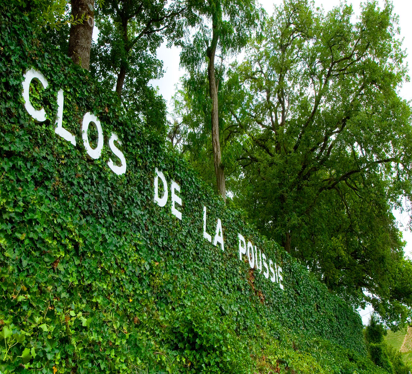
Perched in a natural amphitheater overlooking the Loire River, Domaine de la Poussie is one of Sancerre’s oldest and most storied estates. The first records of La Poussie date back to the 15th century, when its steep, semi-circular slopes were already prized for their extraordinary exposure and chalky soils. The estate’s distinctive bowl-shaped vineyard remains one of the region’s most recognizable landmarks—a near-perfect expression of Sancerre’s limestone heart.
Today, the domaine is owned by La Maison Gremillet, under the stewardship of Baron Patrick de Ladoucette, whose family has been synonymous with Loire Valley wine for generations. From these historic slopes near Chavignol, Sauvignon Blanc finds its purest and most elegant form: vibrant citrus, white flowers, and a saline finish that reflects the fossil-rich terres blanches soils.
Meticulous hand-harvesting and gentle vinification preserve the character of the vineyard, yielding wines that balance minerality and ripeness with seamless grace. With its iconic site and lineage, Domaine de la Poussie remains a benchmark for classic Sancerre—where centuries of heritage meet the precision of modern winemaking.
Domaine de la Poussie
Domaine William Fèvre
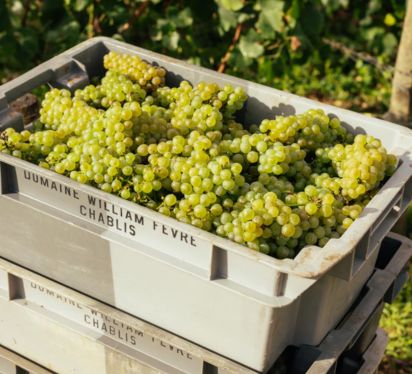
Few names are as synonymous with Chablis as Domaine William Fèvre, a house that helped define the region’s modern identity. Founded in 1959 by William Fèvre himself—a visionary who believed deeply in the potential of Chablis’ Kimmeridgian limestone—the domaine quickly earned a reputation for precision, purity, and unwavering respect for terroir.
Over time, William Fèvre assembled one of the largest and most prestigious holdings in Chablis, spanning more than 78 hectares, including an extraordinary 16 hectares of Premier Cru and 15 hectares of Grand Cru vineyards such as Les Clos, Bougros, Vaulorent, and Les Preuses. These prized parcels, rooted in fossil-rich limestone, express the crystalline minerality and tension that define true Chablis.
Since 1998, the estate has been owned by the Henriot family (Maison Champagne Henriot), under the technical direction of Didier Séguier, who ushered in a new era of finesse and balance. The team shifted toward sustainable and organic viticulture, native yeast fermentations, and restrained oak aging, ensuring the wines capture Chablis’ essential energy without artifice.
Today, Domaine William Fèvre represents the soul of Chablis—classic yet contemporary, mineral yet generous. Each bottle reflects not just the land, but the lineage of visionaries who turned a once-overlooked corner of Burgundy into a global benchmark for purity and precision.